gis AND DIGITAL CREATIVES
Mobile: 213-999-9968
Email: alice03@uw.edu
Handshake: https://app.joinhandshake.com/profiles/alicelee
LinkedIn: www.linkedin.com/in/alicelee03
Home: Newcastle, WA
Contact Info

by ALICE LEE
gEOGRAPHY: DATA SCIENCE STUDENT
Hello, my name is Alice, student at the University of Washington, Seattle. I’m studying Geography: Data Science and gaining hands-on experience with GIS tools and spatial analysis. I plan to explore ArcGIS and remote sensing this spring and more that could develop my GIS skills. My creative sides are not limited to GIS, but also in Digital 3D Design. Thank you!
gis
MAPPING PROJECTS (Using qgis)
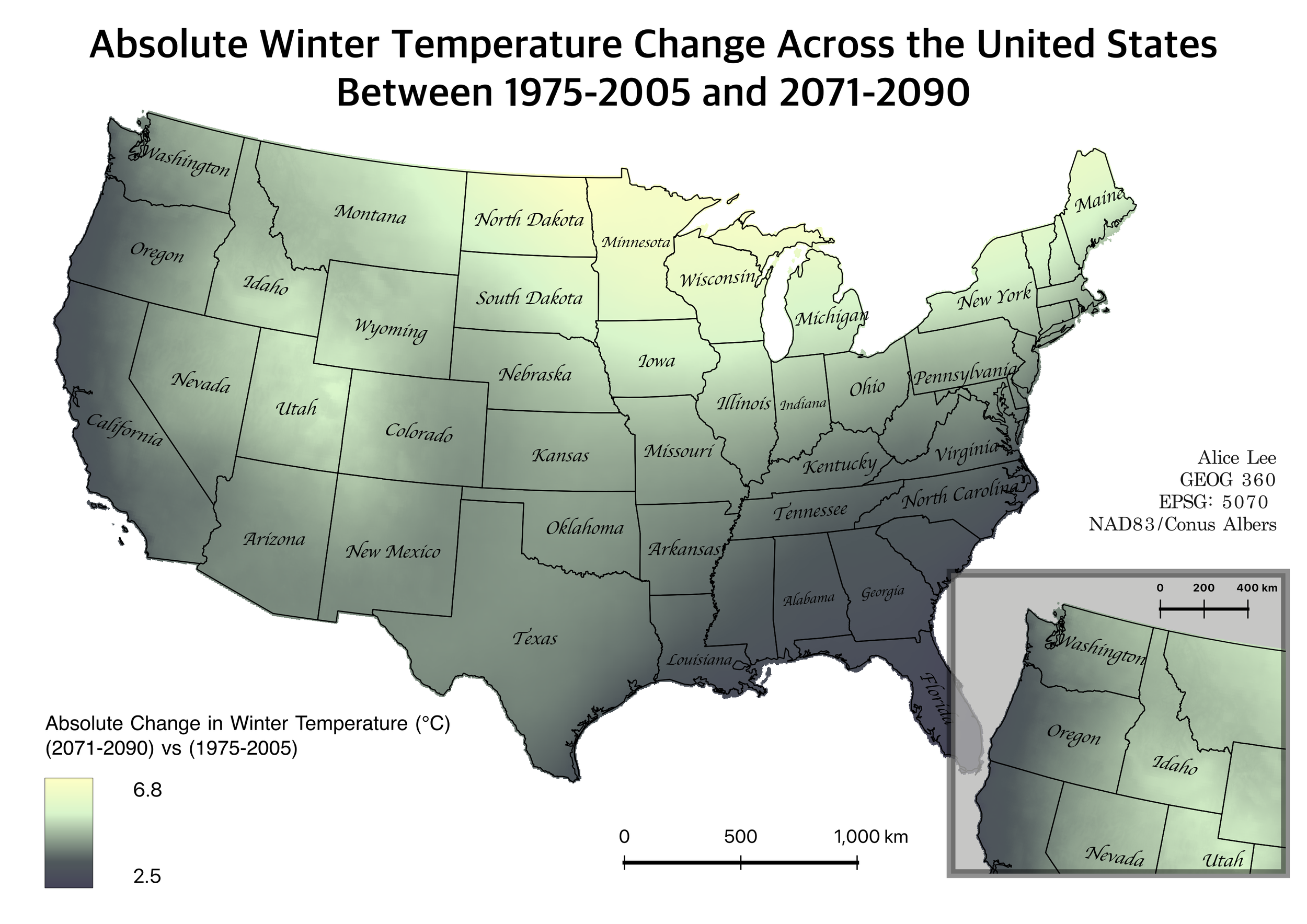
q1. how is climate change distributed across US?
Date of creation: 02/07/2026
Date of creation: 01/23/2026
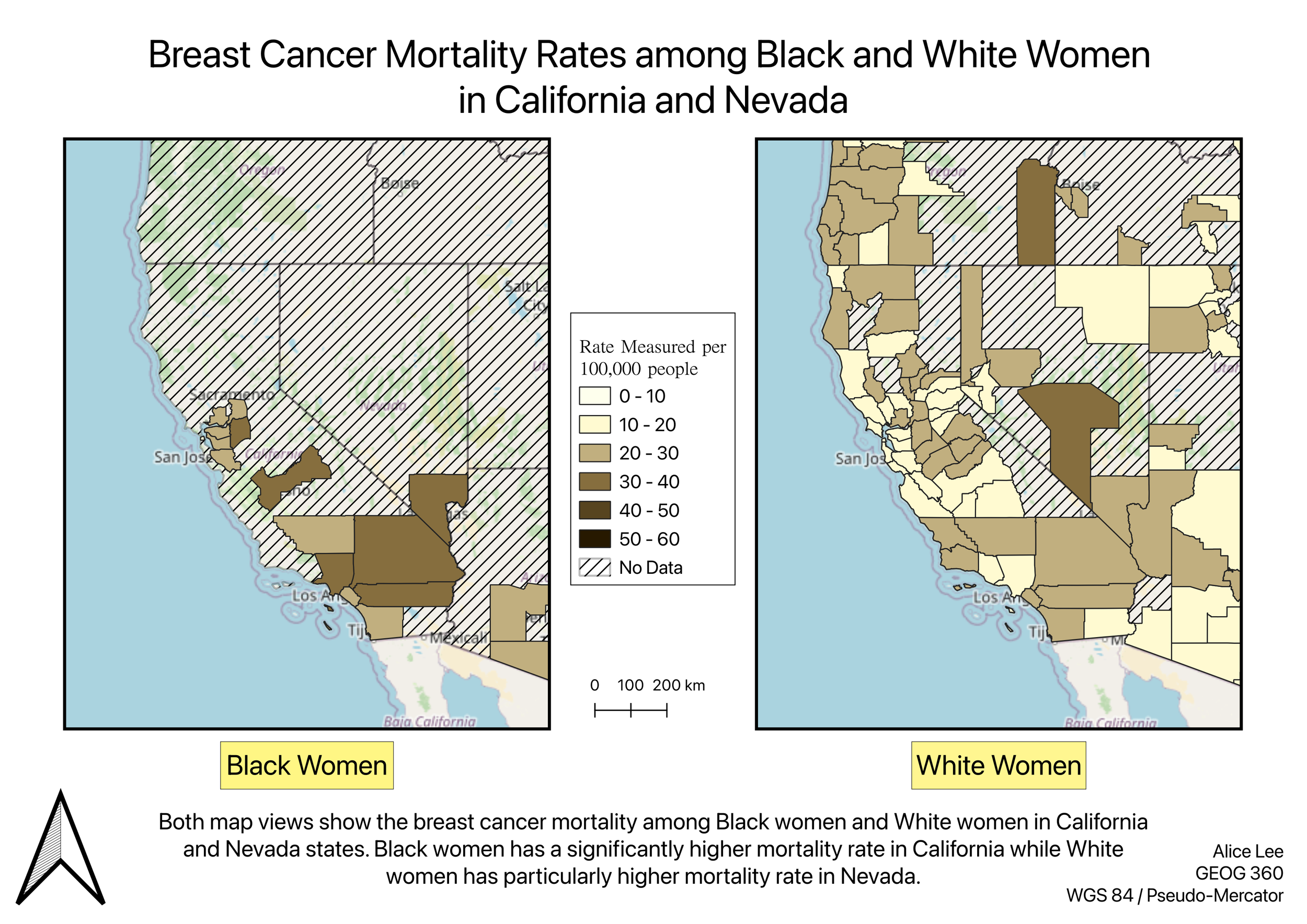
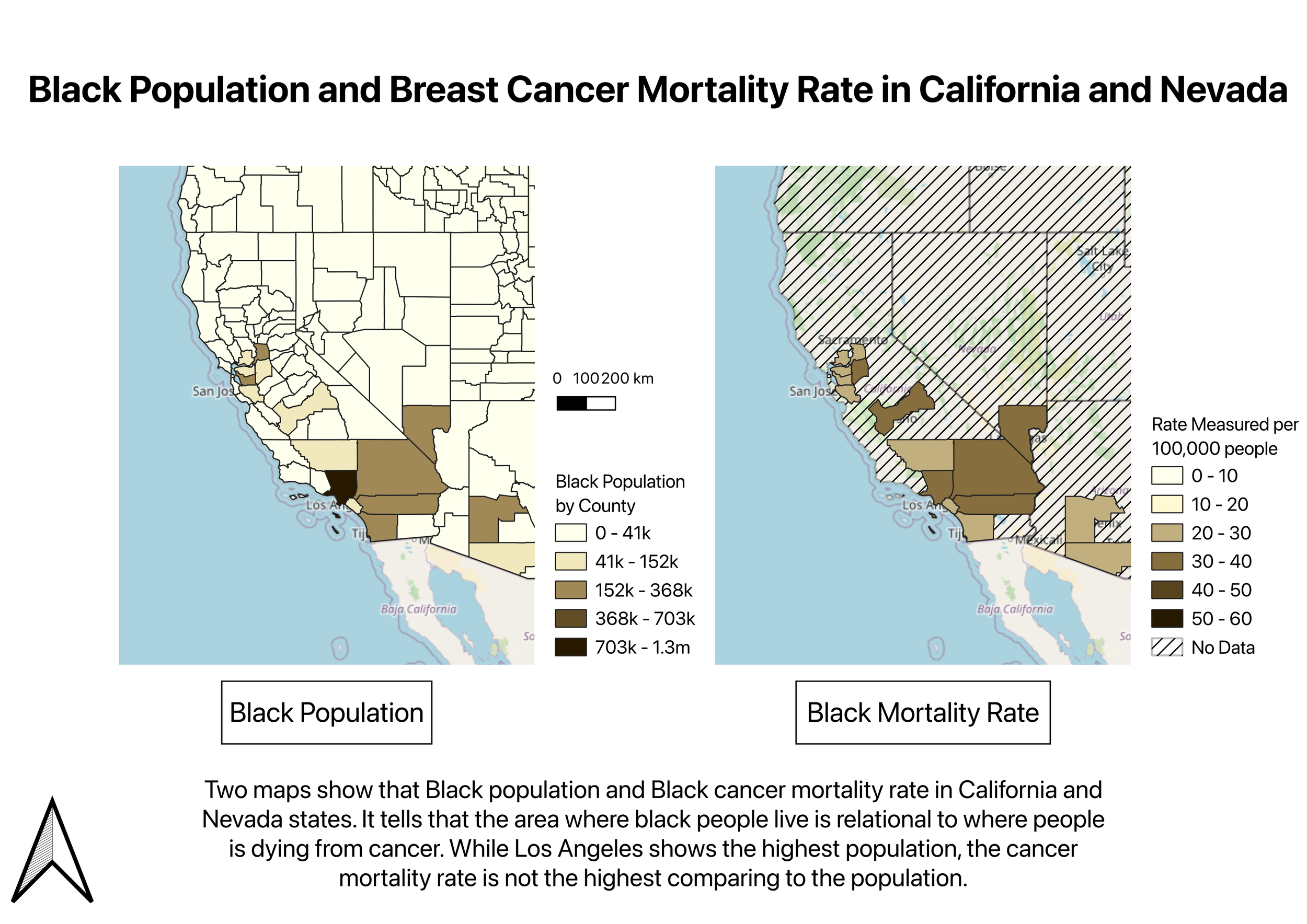
q4. how are breast cancer mortality rates distributed geographically and by race?
Date of creation: 02/13/2026
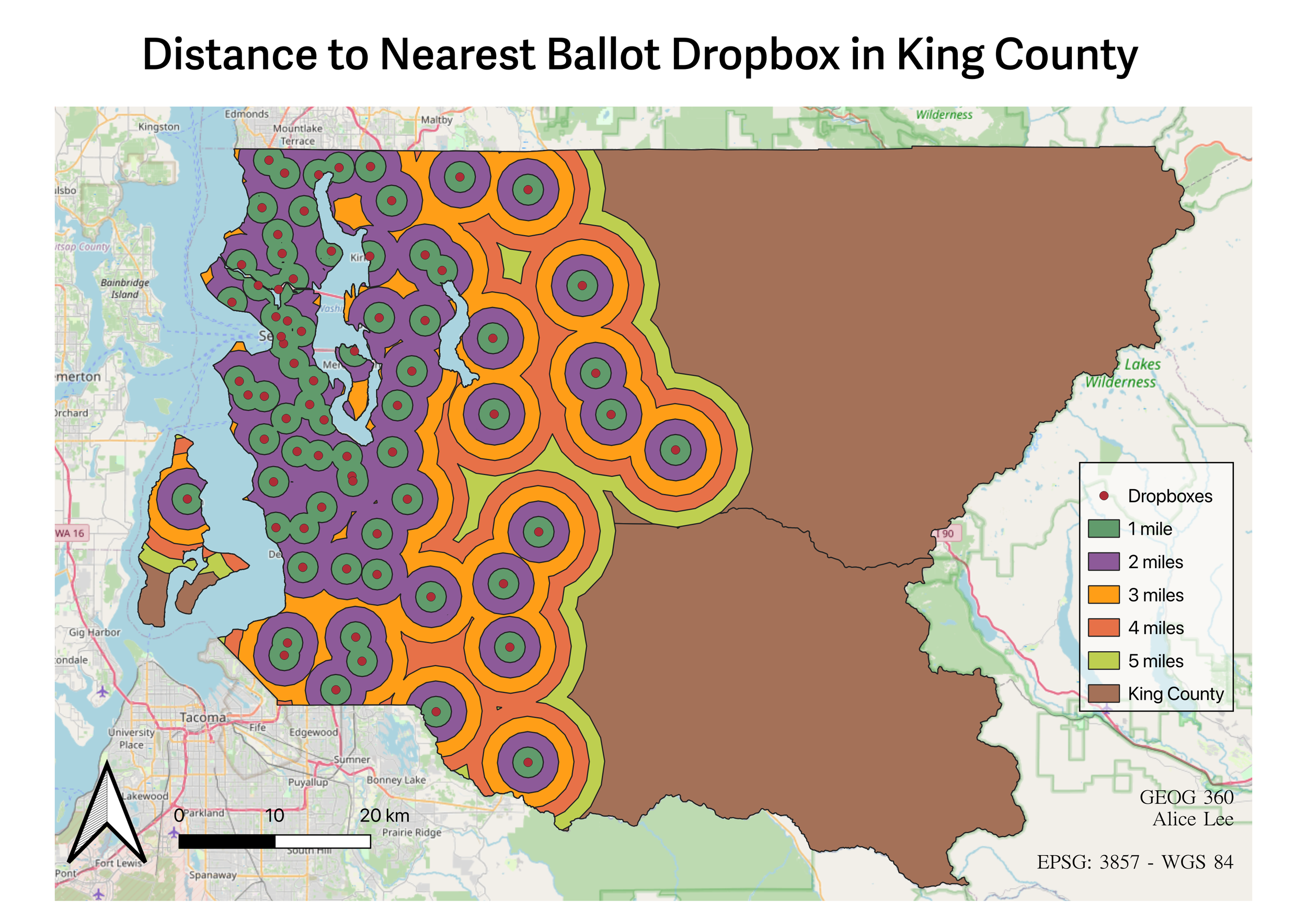
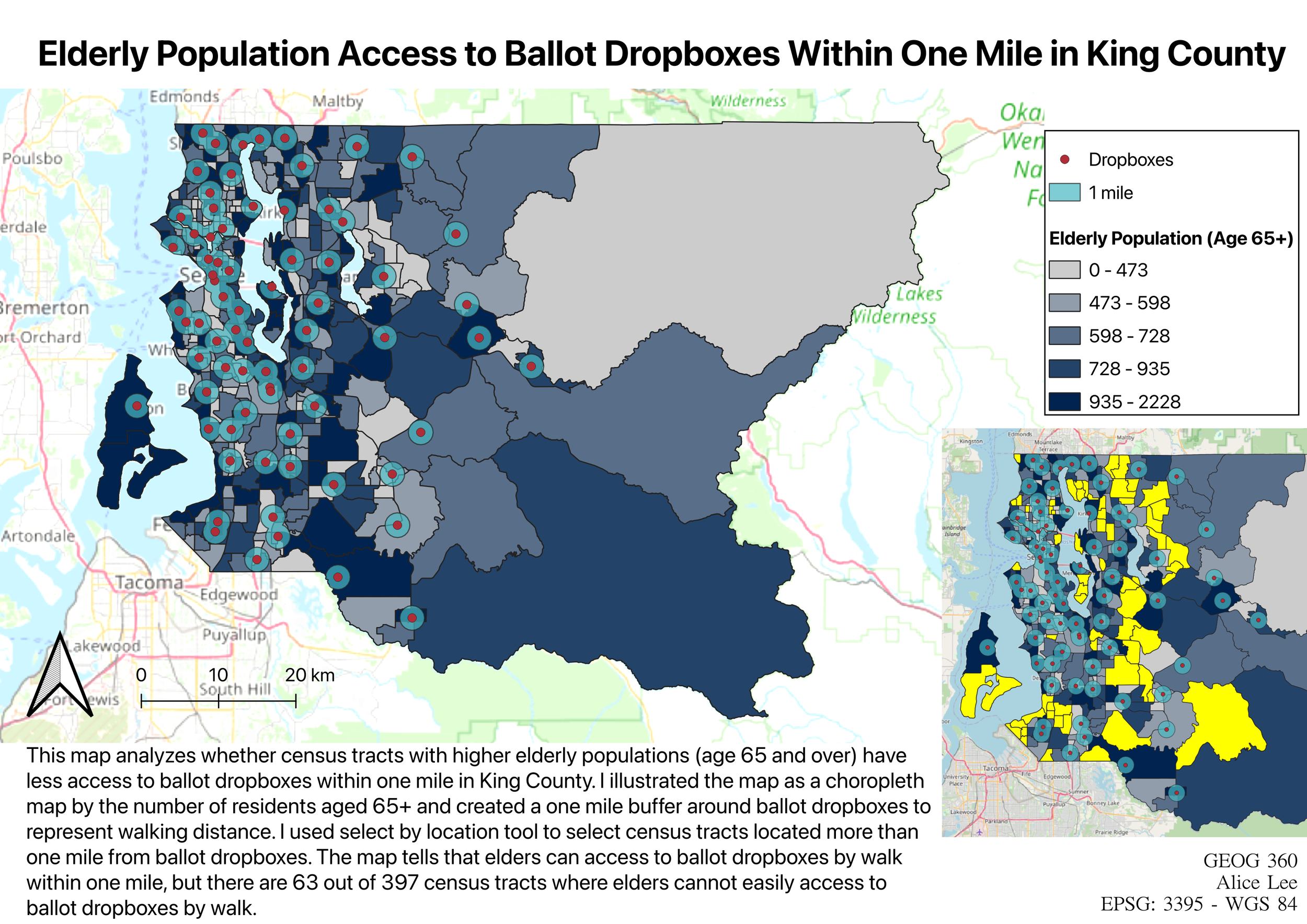
q5. how well distributed are the king county ballot dropboxes?
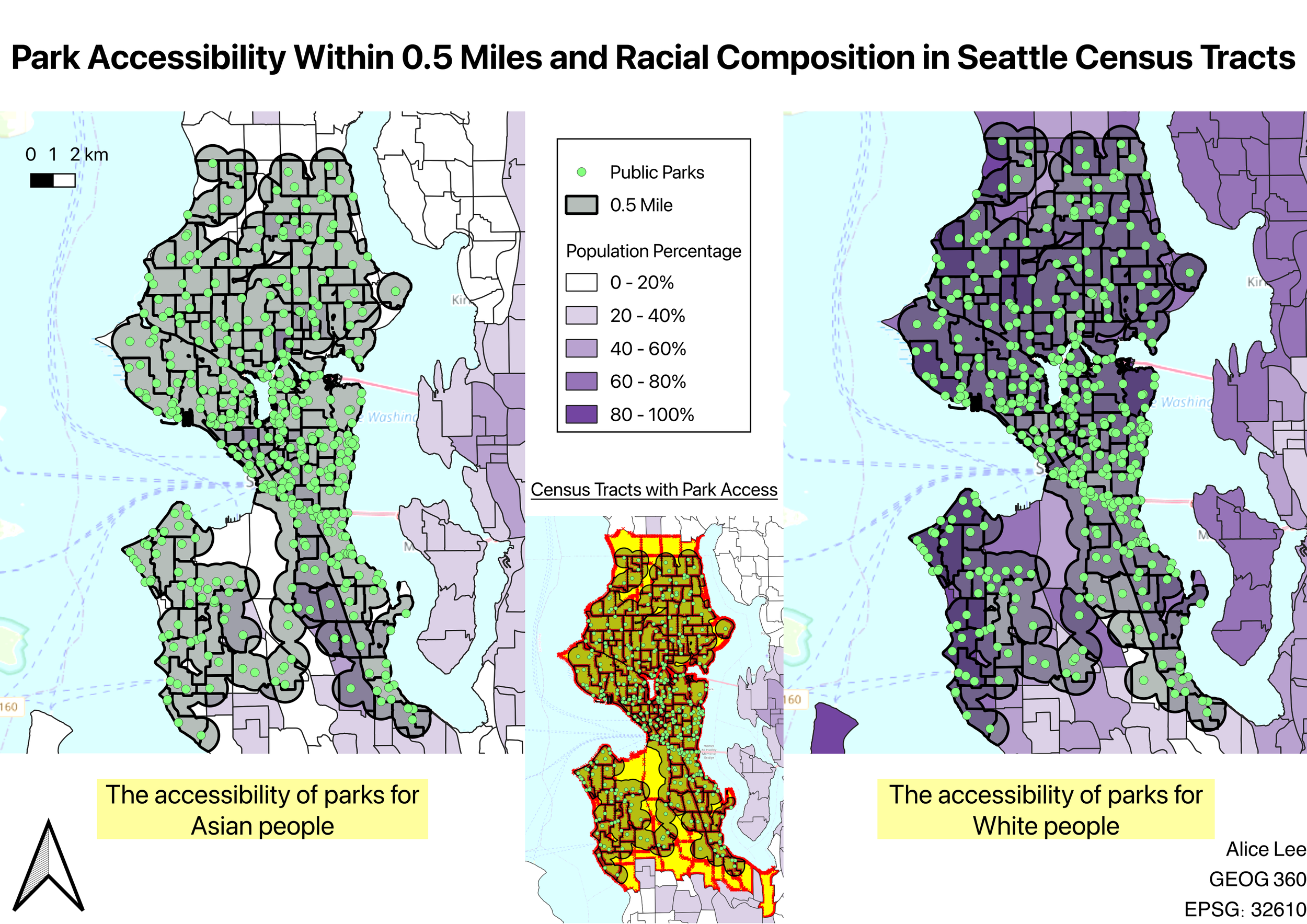
q. how does the proportion of residents living within 0.5 miles of a park vary
across Seattle census tracts with different racial compositions?
Data Sources:
Seattle Parks And Recreation Park Addresses
https://gis-kingcounty.opendata.arcgis.com/
2020 Census State Redistricting Data - Total Population for Tracts
https://gis-kingcounty.opendata.arcgis.com/
2020 Census Tracts for King County - Major Waterbody Features Removed
Date of creation: 02/21/2026
Parks provide communities with opportunities for recreation, social interaction, and improved mental health. However, access to parks is not always evenly distributed across neighborhoods. Depending on the areas, the residents may have accessible parks within walking distance, while other neighborhoods may have limited access to parks within 0.5 miles. I will discuss how does the proportion of residents living within 0.5 miles of a park vary across Seattle census tracts with different racial compositions.
Methodology:
First, I used buffer analysis to show the distance of 0.5 miles from each park location. The distance of 0.5 miles represents a walking distance that residents are likely to have convenient access to parks. While applying buffer analysis, I dissolved the buffer so that it can clearly show the accessibility even if the parks are located densely. After that, I applied clip for census tracts and buffer layers to cut out the areas out of census tracts. Another spatial analysis was a spatial query using the Select by Location tool. I used this tool because it identifies the specific locations that are intersected with census tracts. In this project, highlighting the areas that are accessible to parks within 0.5 miles in census tracts emphasizes whether the areas are accessible to parks or not.
Additionally, when applying spatial join, I had to convert field types to avoid null values so that spatial join could work properly by using field calculator. I created new fields in the joined table such as a percentage of White population and Asian population to compare the population percentage with these two racial compositions.
Result:
The spatial analysis tells that many census tracts in Seattle fall within 0.5 miles, indicating that the city has a significant proportion for convenient access to public parks. Since the Seattle has many parks that are distributed across every neighborhood, it's hard to find the areas where are not accessible to parks within 0.5 miles in Seattle. However, the maps also reveal variation in racial composition across different neighborhoods. Some census tracts with higher percentages of specific racial groups are located closer to the major park areas, while others are located farther from there. The comparison of park accessibility with racial compositions demonstrates that higher percentages of white populations are distributed in Seattle which applies to higher accessibility to parks located in Seattle. While it seems to have great access to parks for Seattle residents, there are still some areas where residents may have fewer parks within a short walking distance.
Date of creation: 03/11/2026
The map argues that winter temperatures across the United States are projected to increase between the historical period (1975-2005) and the future period (2071-2090). The color scheme, inset map, and title support the argument by showing the differences of temperature change with colors on the map and by presenting specific regions bigger to compare the differences clearly. 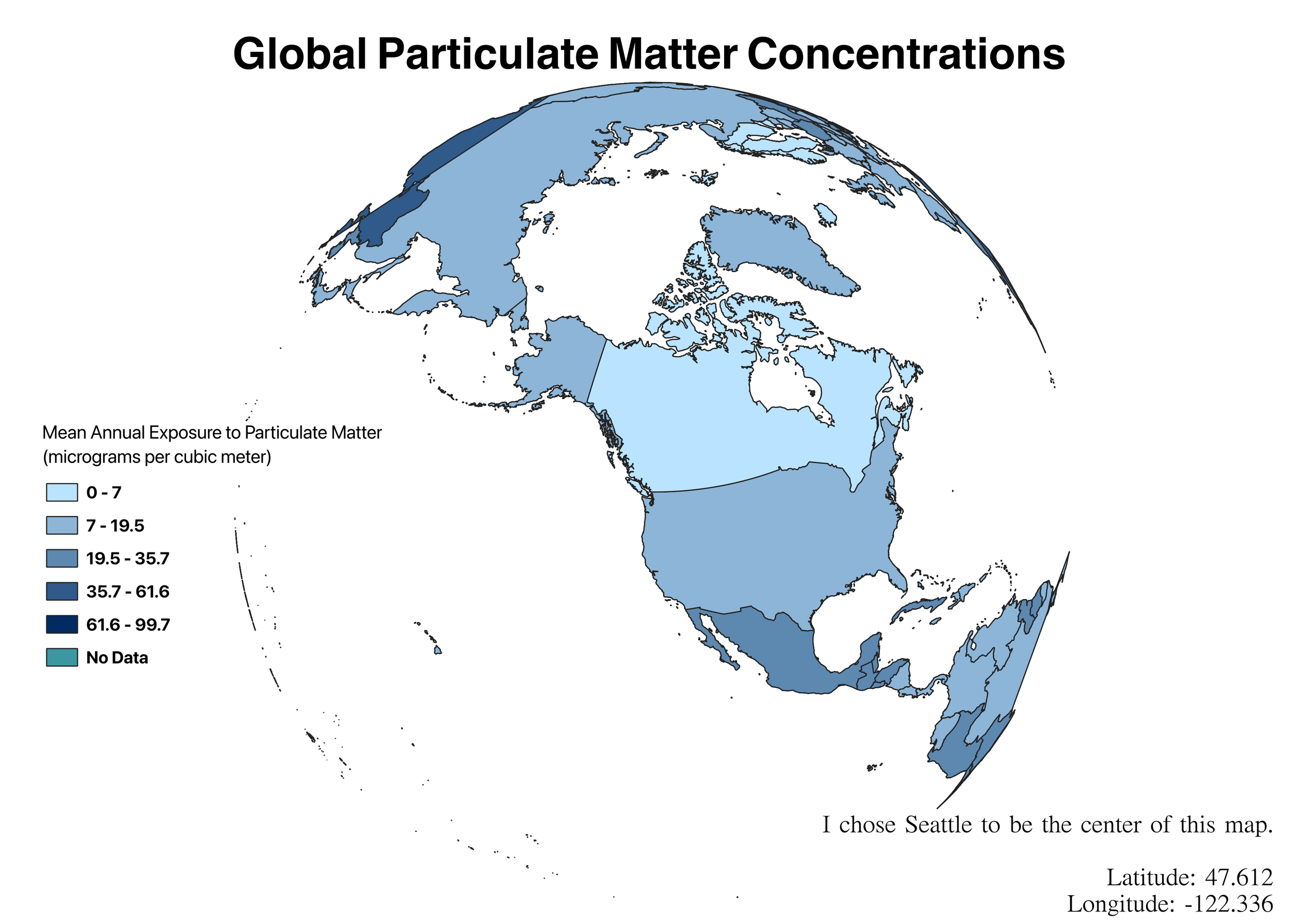
Map 3
Date of creation: 01/30/2026
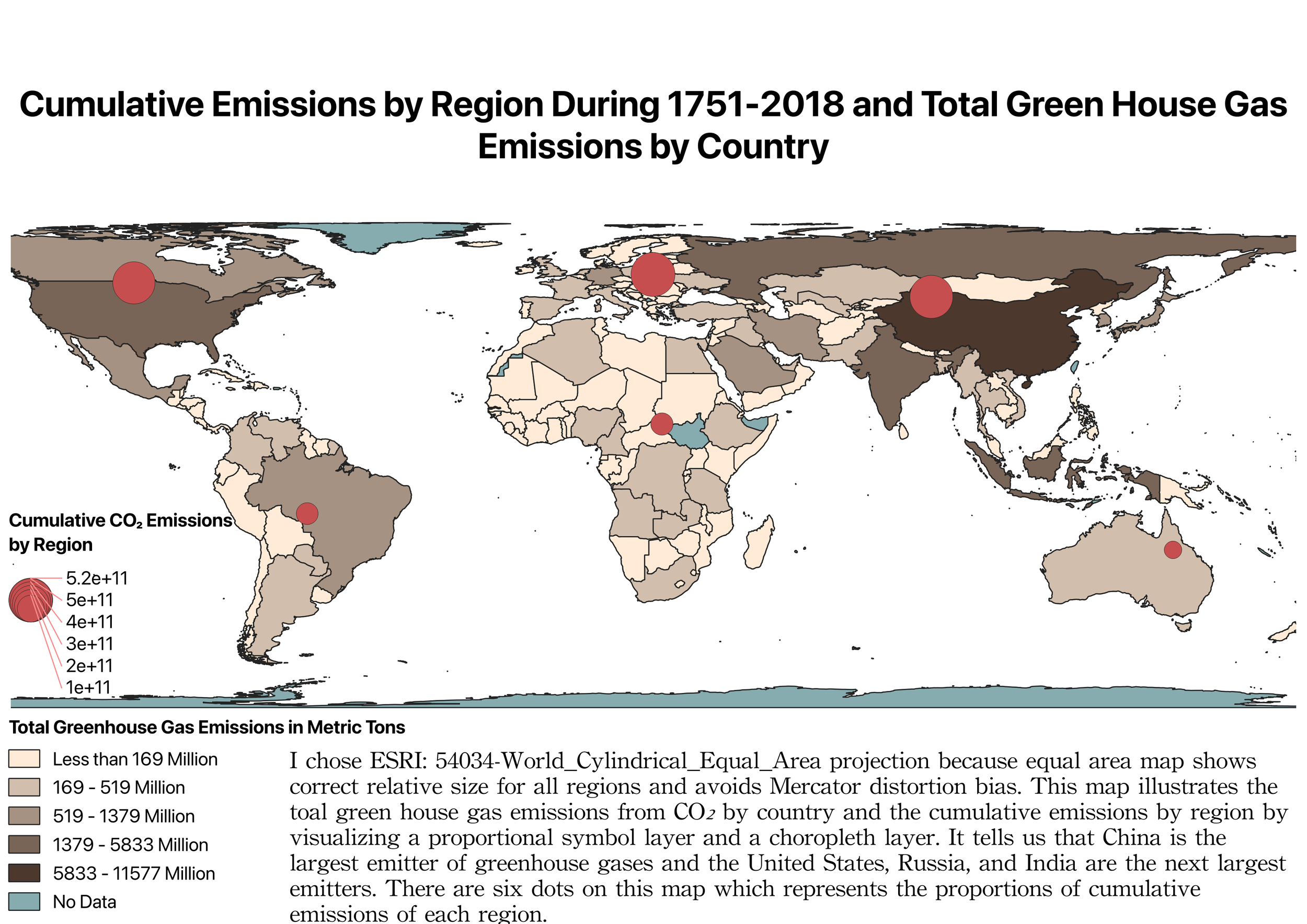
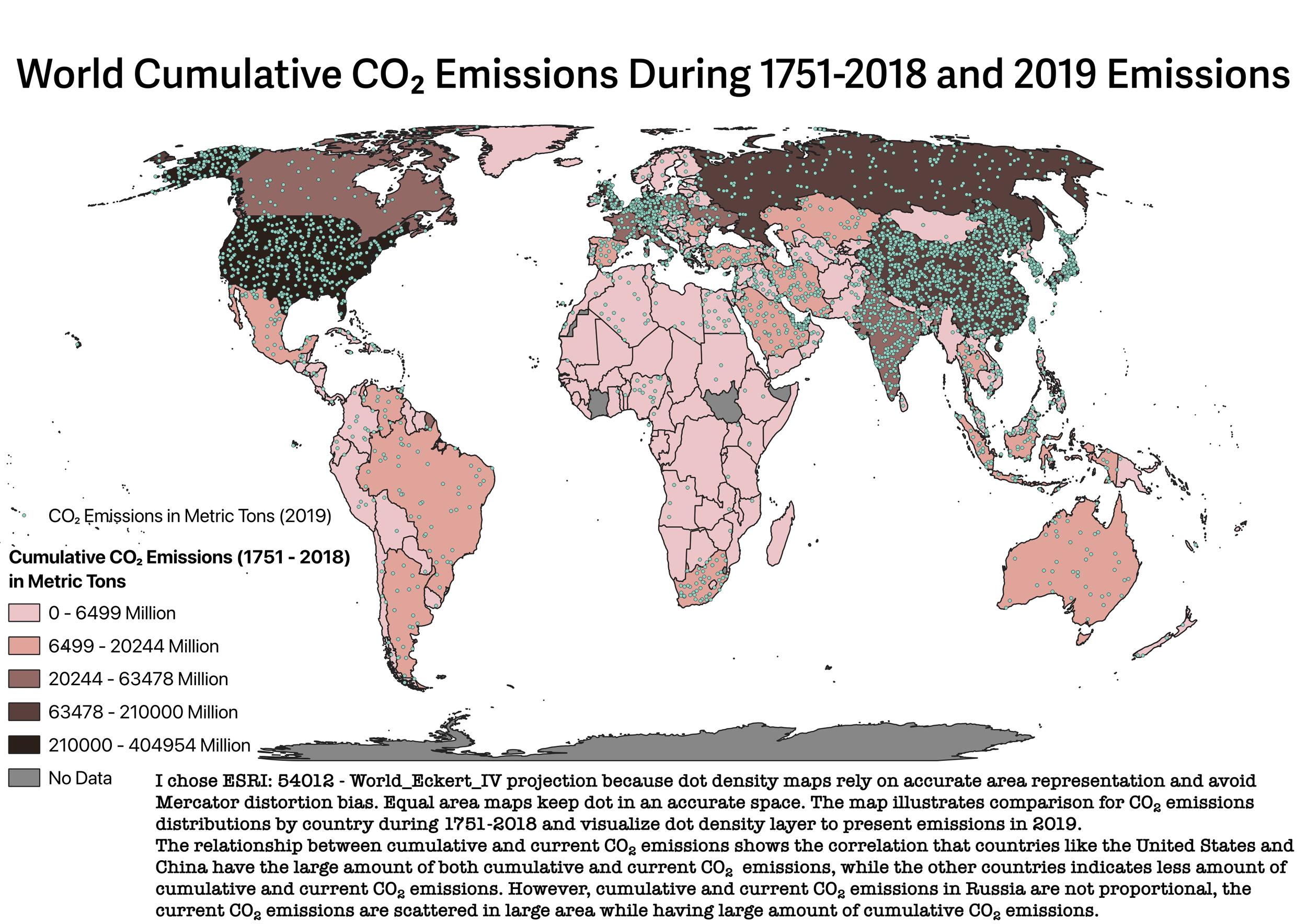
q2. WHICH COUNTRIES HAVE THE LARGEST CARBON FOOTPRINT?
AND HOW ARE CARBON AND OTHER EMISSIONS DISTRIBUTED AROUND THE WORLD?
Map 2
Map 1
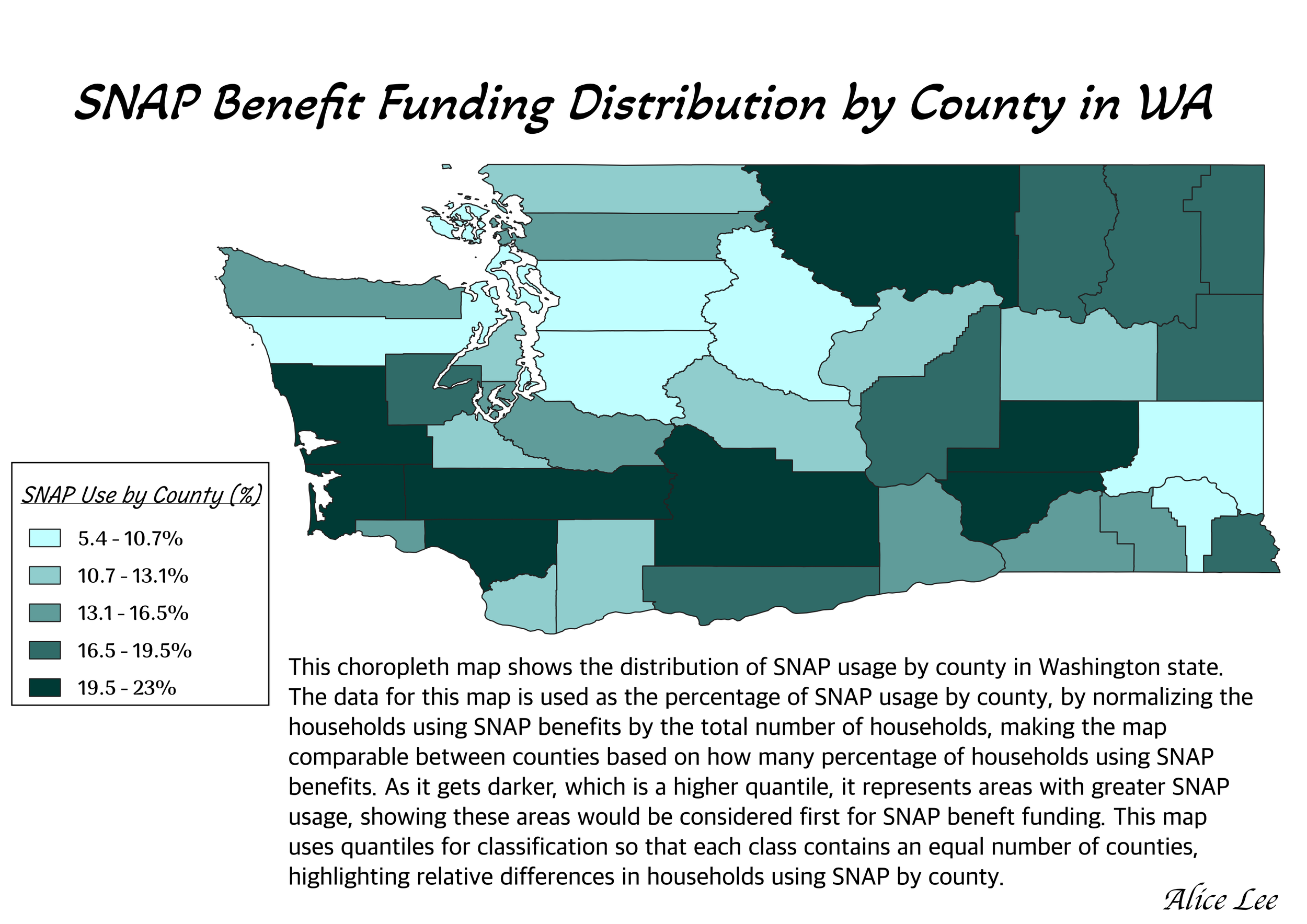
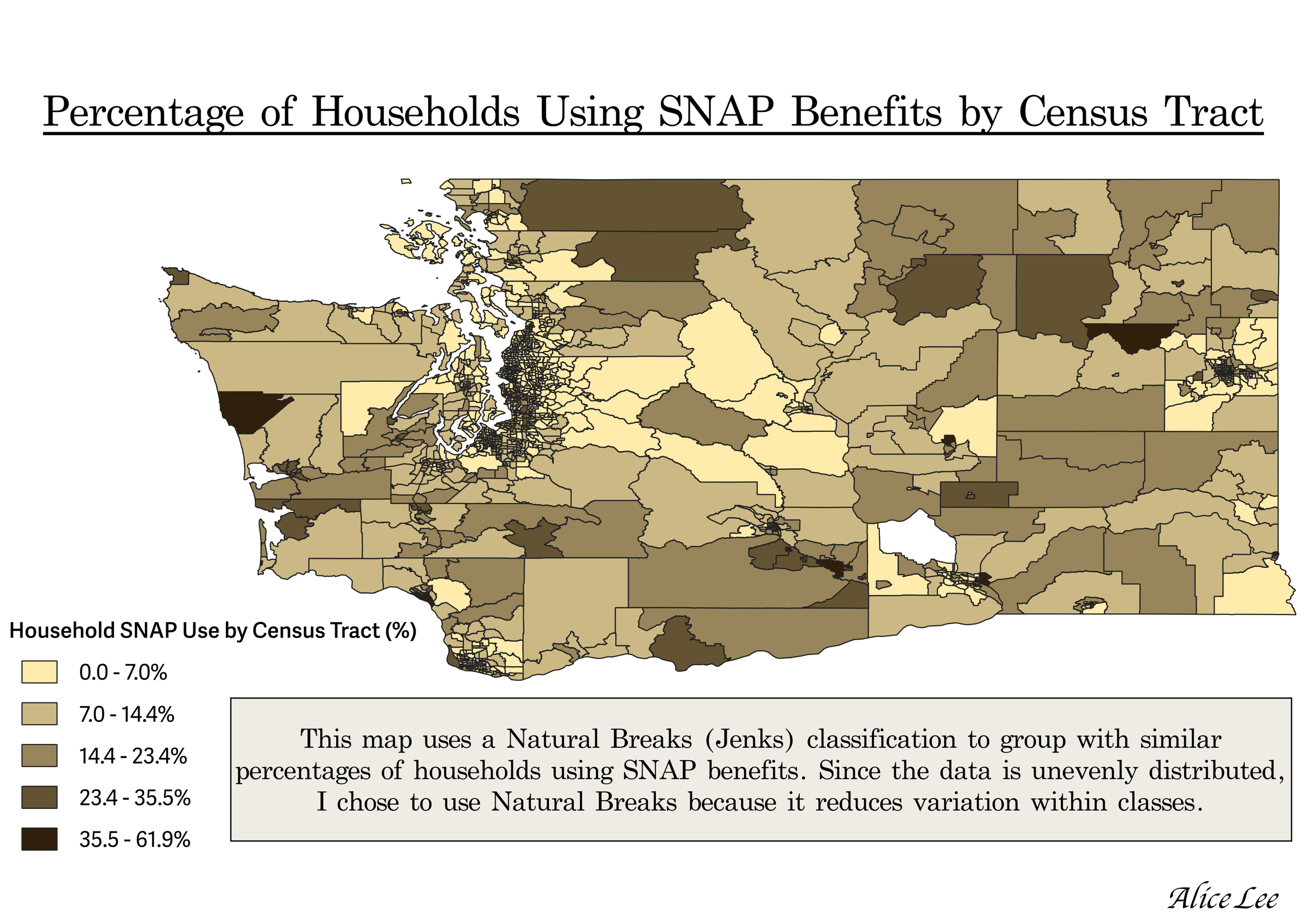
q3. what is the distribution of snap benefit use in washington state?
dIGITAL 3D DESIGN
USING ZBRUSH
rendered of my still life
I created a three-dimensional art inspired by Vanitas style paintings. The five objects on the table are all ones that belong to me, are representative of myself as an individual, and symbolically depict the multifaceted nature of my life.
When placing these objects, I also carefully considered how to create harmony between the colors as well as hues so it could be as pleasing as possible for the viewer. The central quality of this work is it aims to bring a positive feeling into the ordinary elements of daily existence.
Date of creation: 03/23/2023
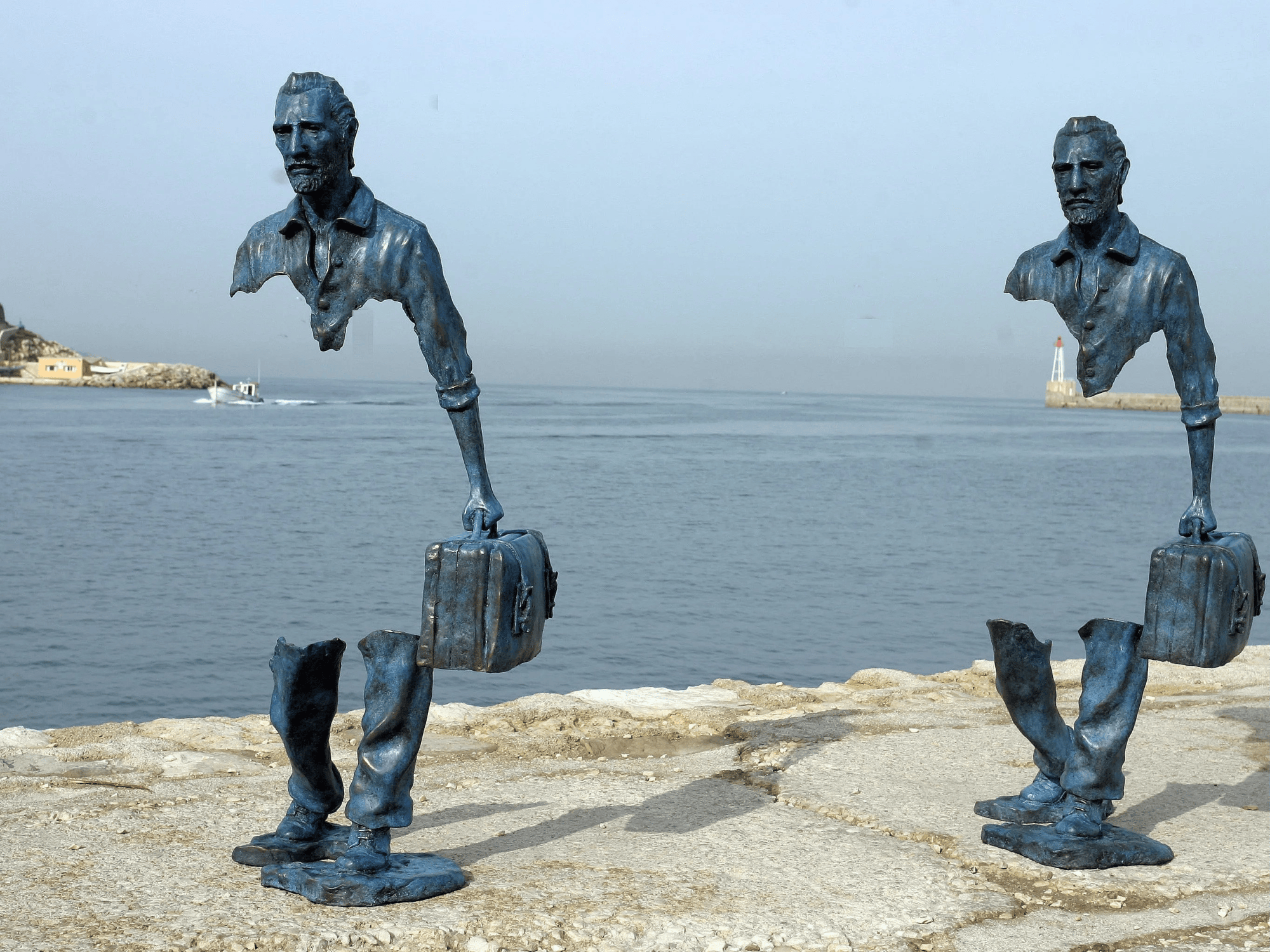
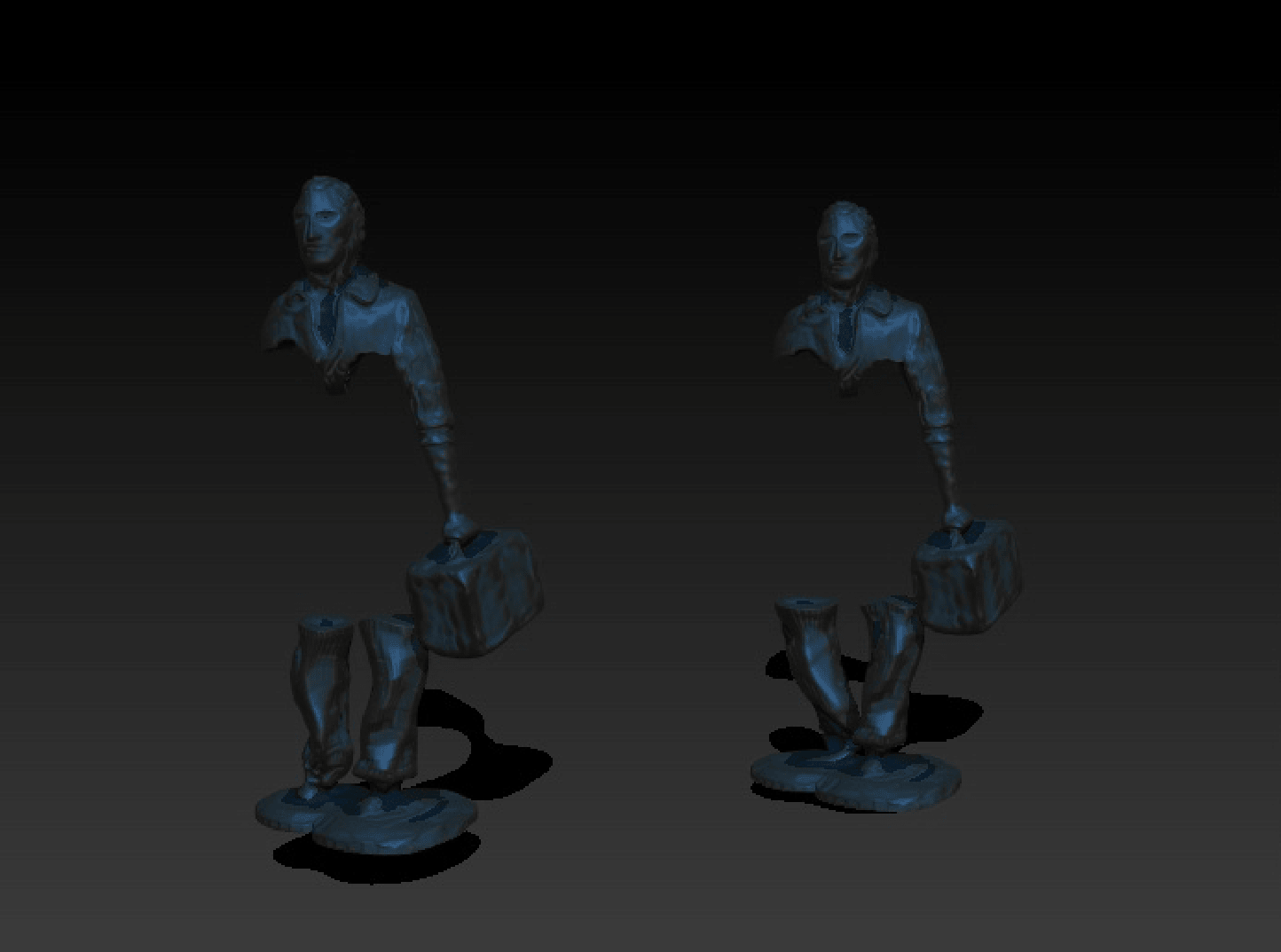
- Les Voyageurs, by French artist
Bruno Catalano, in Marseille, France

mODERN age: the concrete man
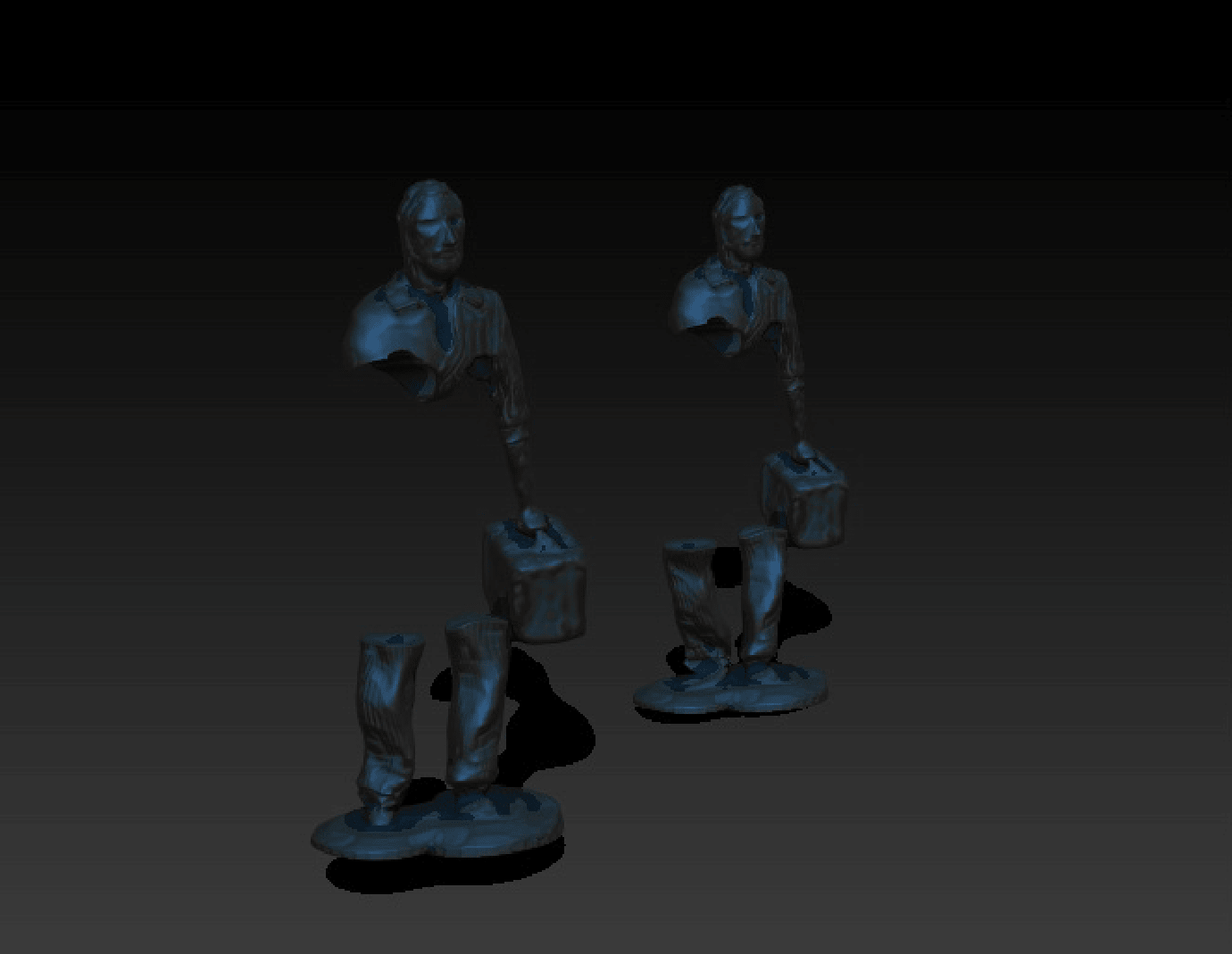
Based on my experiences in Korea, in viewing the daily plight of the Seoul businessman, I was inspired to create a three-dimensional modeling of an interpretation of the well known work Les Voyageurs of Marseille – Por of Fos. In my own work however, instead of a traveler, I wanted to depict the hardship filled voyage through life that the businessman endures. I decided to do a digital medium because I wanted to challenge my skills as a creator on this platform as well make a piece that more accurately represents how the businessman in Seoul is trapped by both his work and his digital screen.